
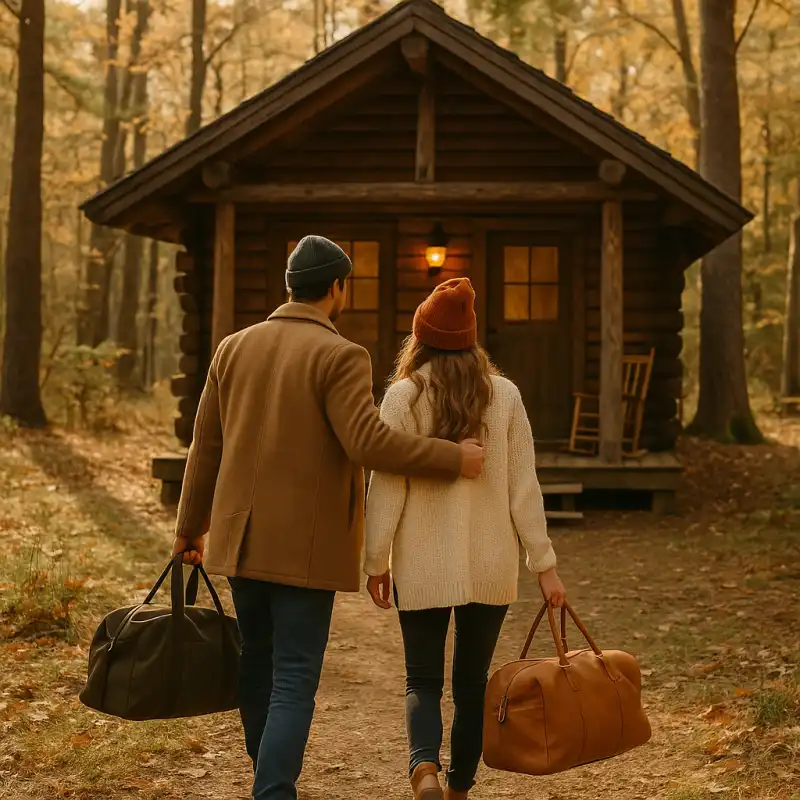
A week-long vacation sounds wonderful until you price it out, check your PTO balance, and remember that someone has to water the plants. The good news: you don’t need a week. A well-planned weekend can reset the whole month.
The 2-2-2 rule treats getaways as the middle tier — a trip every two months. Not a rare event. Not a major production. Just a regular rhythm of getting out of the house, out of your city, and into somewhere new together. Two months is a short enough interval that the trip doesn’t need to be perfect. It just needs to happen.
Here are 25 weekend ideas that are actually doable — no special planning, no excess spending required.
Within driving distance
These assume a two to four hour drive, which opens up a surprising amount of territory most couples have never explored.
A state park cabin or yurt — National and state parks rent furnished cabins for less than most hotels. Book three weeks out, pack firewood or buy it there, and spend the weekend mostly outside. No itinerary needed.
A small town with a Main Street you haven’t walked — Pick any town within three hours that has a historic downtown. Bookshops, local cafes, a regional diner that’s been there since 1962. Two hours of walking tells you more about a place than any review.
A lake house rental — Platforms like Hipcamp and Vacasa rent lake houses by the night. Split the cost with another couple or go just the two of you. Pack groceries and cook there rather than eating out.
A road trip with no destination booked — Pick a direction, drive two hours, and stop where something looks good. The loose structure forces you to make small decisions together all day. Grab a state map at a gas station. It’s a better experience than you’d think.
A mountain town in the off-season — Ski towns in summer, beach towns in October. Prices drop, crowds thin, and the place itself becomes more interesting when it isn’t performing for peak season tourists.
A winery or vineyard region — Most states have a wine region within reasonable driving distance. Spend one afternoon at two or three tasting rooms, stay somewhere nearby, and eat at whatever the locals eat. It doesn’t need to be Napa.
A city you’ve driven through but never stopped in — That mid-size city you always bypass on the way somewhere else. Spend a night. Find out if it has one thing worth seeing. Usually it does.
Budget-friendly escapes
Good getaways don’t require a big spend. The thing that makes a trip feel like a trip is the break from routine, not the price tag.
Camping — actual camping — A tent, a site reservation, a cooler with good food, and no agenda. National Forest campgrounds often cost under $25 a night and require no equipment rental. You already own a sleeping bag.
House-sitting or pet-sitting for a friend — If someone you know is traveling, offer to stay at their place. A different bed in a different neighborhood is still a change of scenery. Bring good food and treat it like a hotel.
An Airbnb in a neighborhood you’ve always meant to explore — Book one night in a part of your own metro area you don’t know well. Spend the weekend like a visitor to your own city. Have dinner somewhere you’d never drive to from your side of town.
A college town for the weekend — Cheap food, interesting bookshops, live music on weeknights, and walkable streets. University towns punch above their weight in things to do.
A lighthouse or historical inn stay — Historic inns and B&Bs often cost less than chain hotels and come with a story. Many serve breakfast. Some have been operating since the 1800s. Worth the novelty.
Adventure getaways
For the weekends when you both need to get moving.
A whitewater rafting day trip with a night before — Book a half-day rafting trip, drive out the night before, stay somewhere nearby. The trip itself is a few hours — what makes it a getaway is the full weekend away from home.
A mountain bike trail town — Towns like Bentonville, Arkansas or Moab, Utah have trail systems designed for a weekend. Rent bikes if you don’t have them. Spend two days riding, one night eating well.
A surf lesson trip to a coastal town — You don’t need to be good at surfing for this to be a great weekend. Book a beginner lesson one morning, spend the rest of the time on the beach. The lesson is the anchor that makes the trip feel intentional.
Ski or snowboard weekend — A Friday-to-Sunday ski trip with one lift ticket day is a different experience than a week-long ski vacation. It’s more focused, easier to budget, and easier to plan. Most resorts are within a few hours of a major city.
A backcountry overnight hike — One night in a backcountry camp changes the experience completely. No cars, no restaurants, no crowds after the first mile. Requires a permit in some areas — check ahead.
Relaxation-first trips
Sometimes the point is simply to slow down.
A hot springs resort or spa town — Many states have natural hot springs with affordable day access or overnight packages. Soak for an afternoon, eat somewhere good, sleep well. A strong template for a low-effort reset.
A beach town in shoulder season — Late September through October, most coastal towns still have good weather and half the summer crowds. Rent a place for two nights, walk on the beach, eat at the places that stay open year-round because the locals like them.
A farmstay — Some farms and ranches rent lodging, often with access to the property — animals, land, silence. Hipcamp lists hundreds of working farms that take guests. Bring groceries and cook your own meals.
A cabin with a hot tub — The bar for this trip is deliberately low. Get a cabin, use the hot tub, cook dinner, sleep late. No itinerary. The location is almost irrelevant as long as there’s trees and no cell signal.
A bookshop town stay — Towns built around second-hand bookshops exist, and they are worth a visit. Hay-on-Wye in Wales is the famous one, but American equivalents include Reinholds in Pennsylvania and a handful of others. Spend the weekend browsing and reading.
How to make getaways a habit
Twenty-five ideas is a good list. Actually doing them every two months is where most couples fall short — not because the trips are hard, but because without a system, they stay in the planning stage indefinitely.
Book the next trip before you come home from this one — The hardest part of every getaway is getting the first date on the calendar. Do it while you’re still on the trip and the motivation is high. Even a placeholder — “cabin weekend, first week of April” — is enough.
Keep a shared running list — Not a formal plan. Just a note in your shared apps where either person can add ideas when they see them. When it’s time to pick a trip, you already have twelve options ready.
Rotate who plans it — One person handles the research and booking, the other handles the gear and food packing. Alternate each trip. It keeps the planning from landing entirely on one person every time.
The 2-2-2 framework makes getaways the second tier — more involved than a weekly date night, more accessible than an annual trip. Every two months is frequent enough to stay in the habit, close enough together that you’re always working toward the next one.
If you want help keeping the cadence, 2Hearted is built for exactly this. Set your rhythm — date night, getaway, big trip — and get suggestions matched to you both. Try it free.